Call us at (904) 736-3732 to get started on your concrete project!
A loaded garbage truck weighs 60,000 pounds. The driver backs in, drops the forks, grabs a dumpster that weighs a few thousand pounds on its own, lifts it overhead, slams it back down, and drives off. That happens twice a week, 52 weeks a year. A trash pad that wasn’t poured thick enough or reinforced properly doesn’t survive that for long.
We’ve replaced trash pads across Jacksonville that were crumbling after three years. Same story every time — somebody poured a 4-inch slab with no rebar, same spec as a backyard patio, and expected it to hold up to a front-loader. It didn’t.
LCE Concrete Contractor Jacksonville pours dumpster pads and trash enclosure slabs built for the actual forces involved. Licensed, bonded, insured. Four years in business, 5-star Google rating. We know what these pads take and we pour them accordingly.
Call or text for a free estimate. We answer the same day.
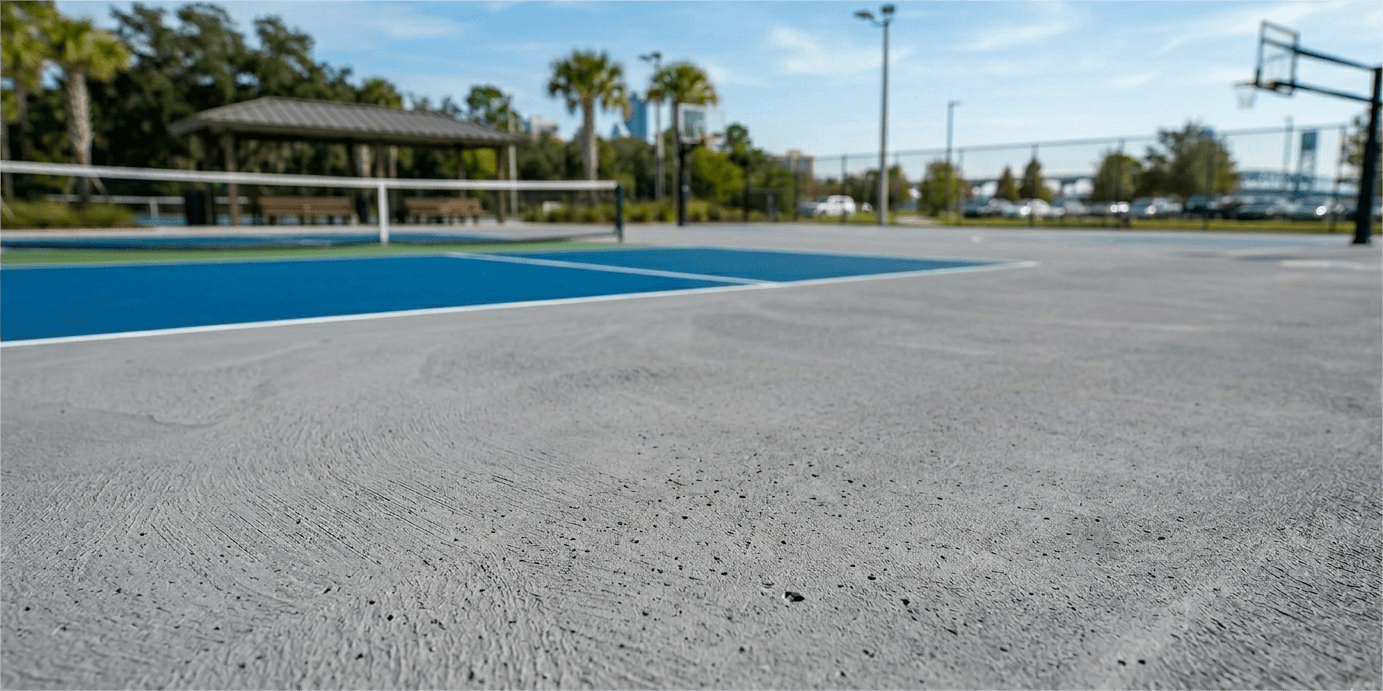
LCE Concrete Contractor Jacksonville pours sport court slabs — basketball courts, pickleball courts, multi-sport pads, and practice areas. Four years in business across Jacksonville, FL. Licensed, bonded, insured. 5-star Google rating. We know what a sport court slab requires that a regular slab doesn’t, and we don’t cut those corners.
Call or text for a free estimate. We answer the same day.
Thin concrete. That’s it. That’s the reason 90 percent of the time.
A dumpster pad needs to handle three things that a regular slab doesn’t. Concentrated point loads from the dumpster feet — those little steel pads on the bottom of the container sit on maybe 12 square inches each and they’re carrying thousands of pounds. Impact loading when the truck drops the empty dumpster back on the pad after dumping it — that’s not a gentle set-down, it’s a controlled slam. And the truck itself — front axle sitting on the approach slab while the forks do their work, rear axle rolling across the pad on every pickup.
A 4-inch slab can’t take that. Not for long. The point loads punch through. The truck weight cracks it. The impacts break up the surface. Within a couple of years you’ve got a pad that’s crumbled into gravel and the dumpster is sitting crooked in a hole.
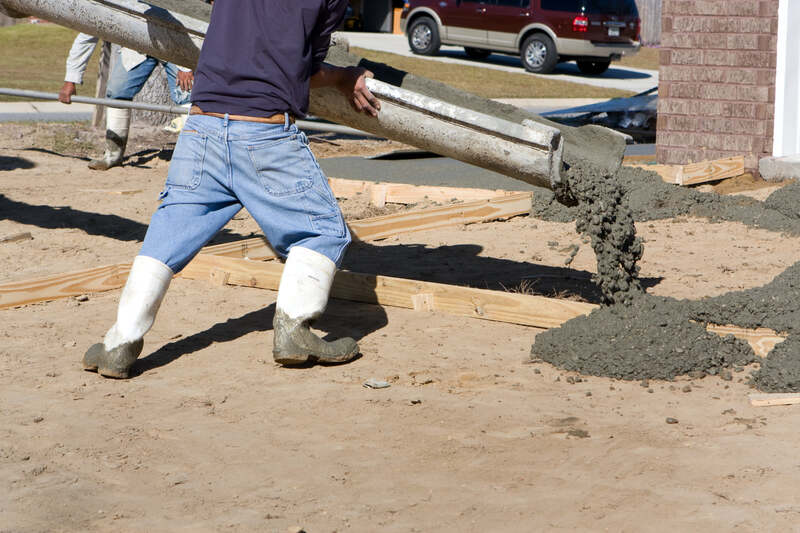
We pour trash pads at 6 inches minimum with rebar on 12-inch centers. Approach aprons where the truck drives on get the same treatment or heavier depending on how often the truck visits and how heavy it is. The base underneath gets over-compacted because this is one pour where settling isn’t just cosmetic — it’s structural failure.
It’s not a big slab. Most trash pads are 10×10 or 12×12 feet. But the amount of reinforcement and base work crammed into that small footprint is more than what goes into a patio three times the size.
We excavate to depth — usually 12 to 14 inches below finished grade to get room for base material and 6 inches of concrete. Subgrade gets compacted with a plate compactor or roller depending on the soil. Jacksonville’s sand compacts well but it also washes out if the pad doesn’t drain right, so we grade the base with a slight pitch to keep water moving off the surface and away from the enclosure.
Aggregate base goes down — 4 to 6 inches of crushed stone compacted in lifts. Forms get set. Rebar gets tied on a grid and set on chairs so it sits in the middle of the slab, not on the ground where it does nothing.
We pour, screed, and finish with a broom texture. Smooth concrete under a dumpster is a bad idea — those steel feet slide on smooth surfaces and the whole container walks around on the pad every time the truck grabs it. Broom finish gives the feet something to grip.
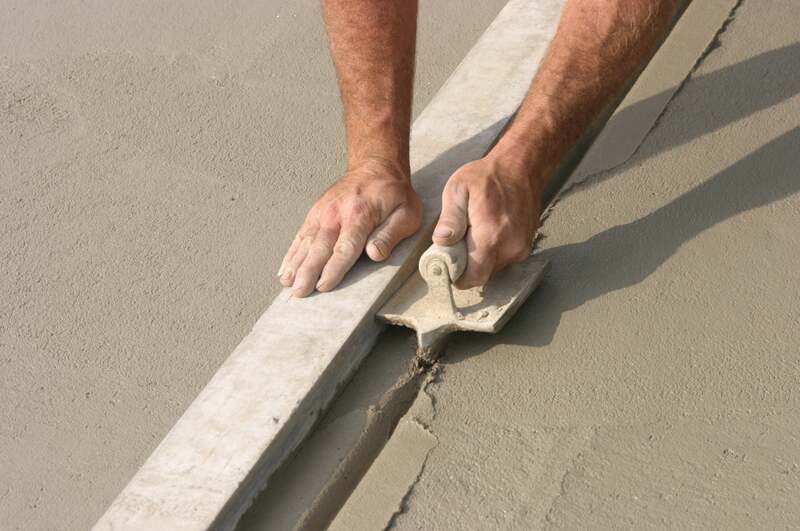
Control joints on a 10×10 pad usually aren’t needed — the slab is small enough to move as one piece. On larger pads or approach aprons, we cut joints where they make sense.
Dumpster pads in Jacksonville run between $2,000 and $6,000 for most commercial jobs. That covers the pad itself, approach apron if needed, and sometimes a small retaining curb or bollard sleeve.
A basic 10×10 pad on decent ground with good truck access — lower end of that range. A 12×20 pad with an approach apron, old pad demolition, soft soil that needs extra base work, and bollard sleeves cast into the concrete — upper end.
What moves the price: pad size, approach apron size, soil conditions, demo of existing concrete, access for the concrete truck, and any enclosure wall footings or bollard requirements.
We quote after a site visit. Free. The number we give you is the number you pay.
The dumpster pad gets all the attention. The approach apron gets ignored. Then the garbage truck drives across 3 inches of parking lot concrete twice a week and cracks it to pieces.
An approach apron is the section of concrete between the parking lot surface and the dumpster pad where the truck actually drives and parks during pickup. If your parking lot is asphalt, the apron is even more critical — a loaded garbage truck will rut asphalt in a single summer.
We pour approach aprons at the same thickness as the pad — 6 inches minimum with rebar. The apron extends far enough out from the pad to catch the full truck wheelbase during pickup. Usually 20 to 30 feet of approach, depending on how the truck accesses the enclosure.
Skipping the apron to save money just moves the damage from the pad to the parking lot. We’ve repaired parking lot sections in front of dumpster enclosures where the asphalt or thin concrete was destroyed in under two years because nobody poured an apron. Fix it once. Fix it right.
Most municipalities and property management companies require a screen enclosure around dumpster pads — block walls or steel gates that hide the containers from the street and the parking lot.
We pour the footings and stem walls for block enclosures and we set bollard sleeves into the pad concrete for steel pipe bollards. Bollards protect the enclosure walls from getting hit by the truck or by cars cutting through the lot. A garbage truck clipping an unprotected block wall at 5 mph will take out a 4-foot section. We’ve seen it.
If your property requires a full enclosure with walls and gates, we coordinate with the block mason or the steel gate installer so the footings, anchor bolts, and sleeves are all in the right spots. Pouring the pad without knowing where the walls go means somebody’s drilling into cured concrete later — which is slower, weaker, and more expensive.
We’ll work from your site plan or your property management company’s enclosure specs. If you don’t have specs, we can lay it out based on Jacksonville’s code requirements and the waste hauler’s access needs.
Water sitting on a trash pad isn’t just a nuisance — it mixes with whatever’s leaking out of the dumpster and runs into the parking lot, the storm drain, or the neighboring property. That’s an environmental problem and it’s a code violation in most jurisdictions.
We slope every pad so water drains to a specific point. On pads that require containment — usually food service properties where grease and organic waste are involved — we can pour a curbed lip around the perimeter to keep runoff on the pad and route it to a drain that ties into the sanitary sewer or a grease interceptor.
Your waste hauler and the local environmental code determine what level of containment your pad needs. We’ll pour to whatever spec is required. If you’re not sure what’s needed, we’ll help you figure it out during the estimate.
It’s a small job compared to a parking lot or a building slab. But a trash pad that fails is a headache that keeps coming back — the dumpster sits crooked, the truck can’t pick it up cleanly, the surface crumbles into the enclosure, water pools and stinks, and your tenants or customers walk past it every day.
We pour trash pads the same way we pour everything else — correct thickness, proper reinforcement, compacted base, clean finish. The fact that it’s behind the building where nobody’s looking doesn’t mean we pour it any different than the sidewalk out front.
Family-owned, veteran-owned. Licensed, bonded, insured. 5-star Google rating. We guarantee the work. Four years of commercial concrete in Jacksonville and we haven’t poured a trash pad that’s come back on us yet.
Trash pad work across Jacksonville — Downtown, Southside, Westside, Arlington, Mandarin, Northside, the Beaches, San Marco, Riverside, Baymeadows, Town Center, Regency. Also Orange Park, Fleming Island, Ponte Vedra, and St. Augustine.
Apartment complexes, shopping centers, restaurants, office parks, churches, warehouses — if your property has a dumpster, it needs a proper pad under it. Call us.
Call LCE Concrete Contractor Jacksonville for a free estimate. We pour trash pads for commercial properties across Jacksonville, FL — heavy, reinforced, and built for what actually hits them.
Six inches minimum with rebar reinforcement. The pad has to handle the weight of a full dumpster, the impact of the truck dropping it back down, and the truck’s axle weight during pickup. Four inches won’t cut it. We’ve replaced too many 4-inch pads to pretend otherwise.
Depends on the container size. A standard 2-yard dumpster needs at least an 8×8 pad. A 6-yard or 8-yard container needs 10×10 to 12×12. If you have two containers side by side, scale accordingly. We size the pad to fit the containers your waste hauler is providing plus a few inches of clearance on each side.
Yes, unless you want your parking lot destroyed in front of the enclosure. The approach apron should be the same thickness and reinforcement as the pad and extend far enough to catch the truck’s full wheelbase. We include the apron in every trash pad estimate because skipping it just creates a different problem.
Most commercial properties in Jacksonville are required to screen dumpster areas from public view. The specific requirements depend on your zoning and any HOA or property management covenants. We pour the footings and set the hardware — the block or gate work can be coordinated with us or handled by your GC.
Usually, yes. We coordinate with your waste hauler to schedule the pour between pickups. The dumpster gets moved temporarily, we demo the old pad, pour the new one, and it’s ready for the container to go back within a few days. We’ve done this enough times to keep the disruption short.
Between $2,000 and $6,000 for most jobs. Size, soil conditions, approach apron, demo of existing concrete, and enclosure footing work all factor in. We give free written estimates after a site visit.
Call or text. We’ll come look at the site, check the existing conditions, and give you a written price. If you’ve got specs from your property manager or waste hauler, bring them. If not, we’ll figure out what’s needed. Free, no obligation.