Call us at (904) 736-3732 to get started on your concrete project!
You bought a shed, a shipping container, a generator, a piece of equipment — and now you need somewhere solid to put it. Dirt won’t do it. Gravel shifts. Pavers settle. And that “level” spot in your yard isn’t actually level once you put 4,000 pounds on it and it sinks three inches on one side after the first rain.
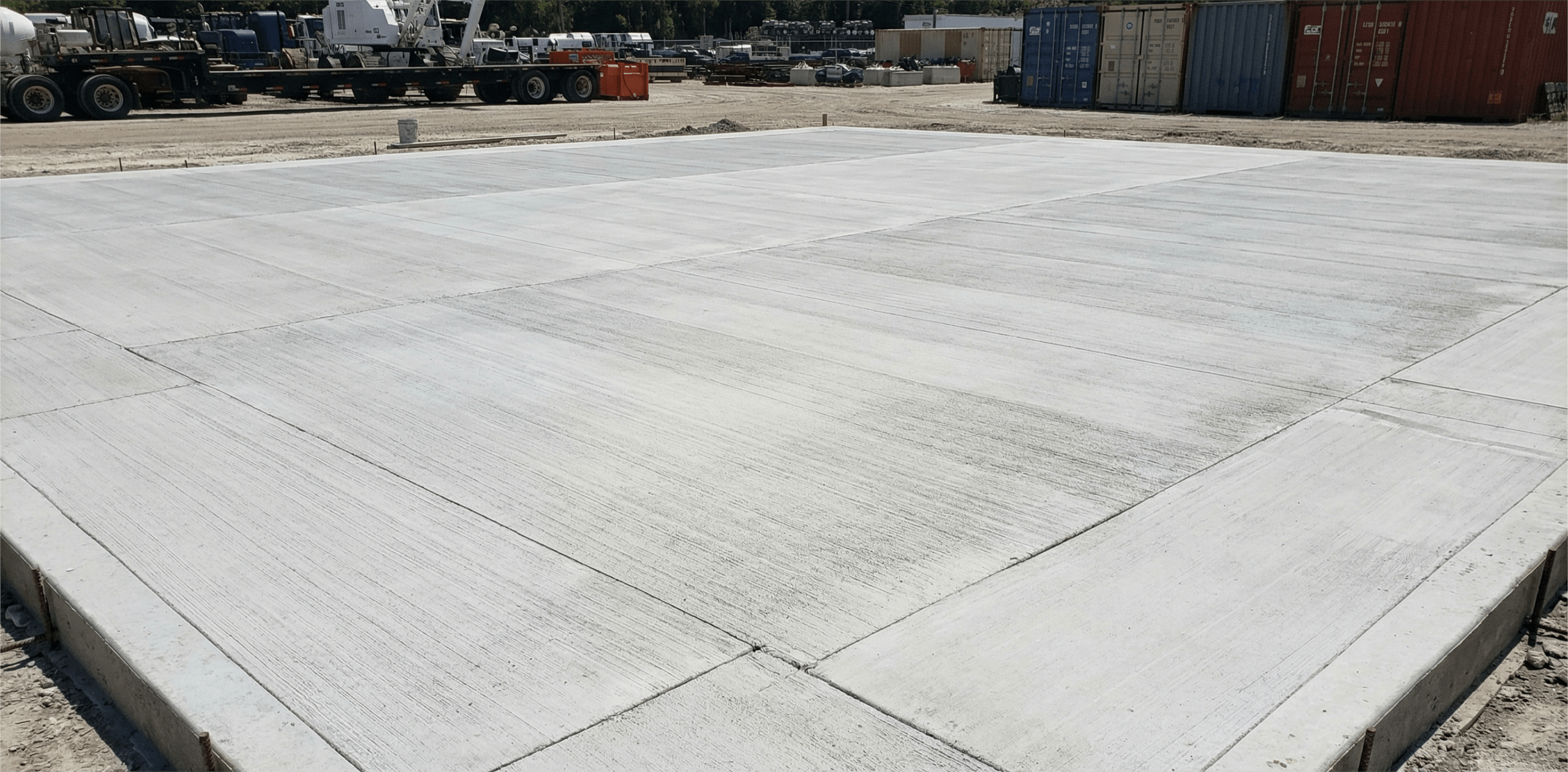
A concrete storage pad fixes all of it. One pour, one flat surface, done.
LCE Concrete Contractor Jacksonville pours storage pads for sheds, shipping containers, generators, HVAC equipment, trailers, outdoor storage units, and anything else that needs a solid surface under it. Licensed, bonded, insured. Four years in business across Jacksonville, FL. 5-star Google rating. We pour it to the right thickness for what you’re storing and we don’t skip the base work that keeps it flat.
Call or text. Free estimate. Same-day callback.
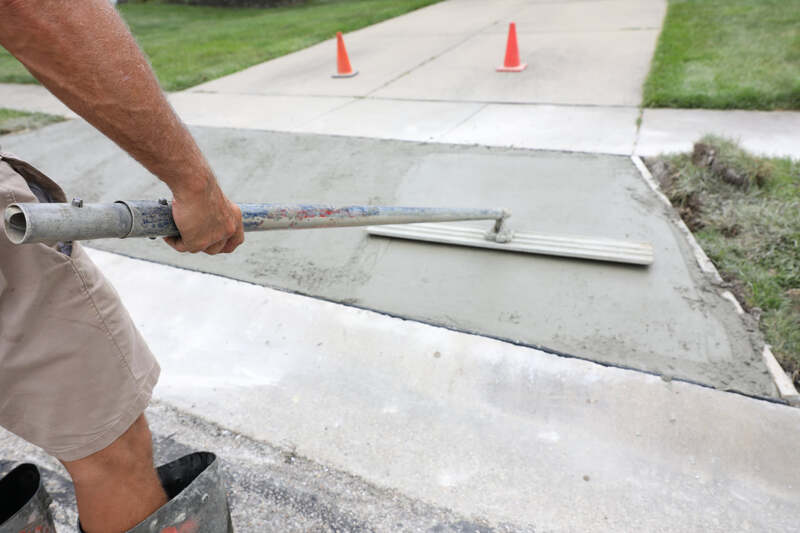
Because cheaper doesn’t mean smarter and it definitely doesn’t mean it’ll still be level in two years.
Gravel pads compact unevenly under weight. Fine for light foot traffic. Terrible for a 3,000-pound shed or a 10,000-pound shipping container. One corner sinks, the door frame racks, and now the door doesn’t close. With a shipping container, uneven settling puts stress on the corrugated walls and they start bowing. We’ve seen containers sitting on gravel pads in Jacksonville that looked like crushed beer cans after a few years.
Wooden platforms rot. This is Florida. Wood in ground contact with 80 percent humidity and a rainy season that lasts five months doesn’t last. Pressure-treated buys you time but it doesn’t buy you forever. Termites don’t read the treatment labels either.
Paver pads look fine on day one. Then the sand migrates, the pavers shift, and the surface isn’t flat anymore. Anything heavy sitting on pavers will accelerate the settling because the point loads push individual pavers down into the base.
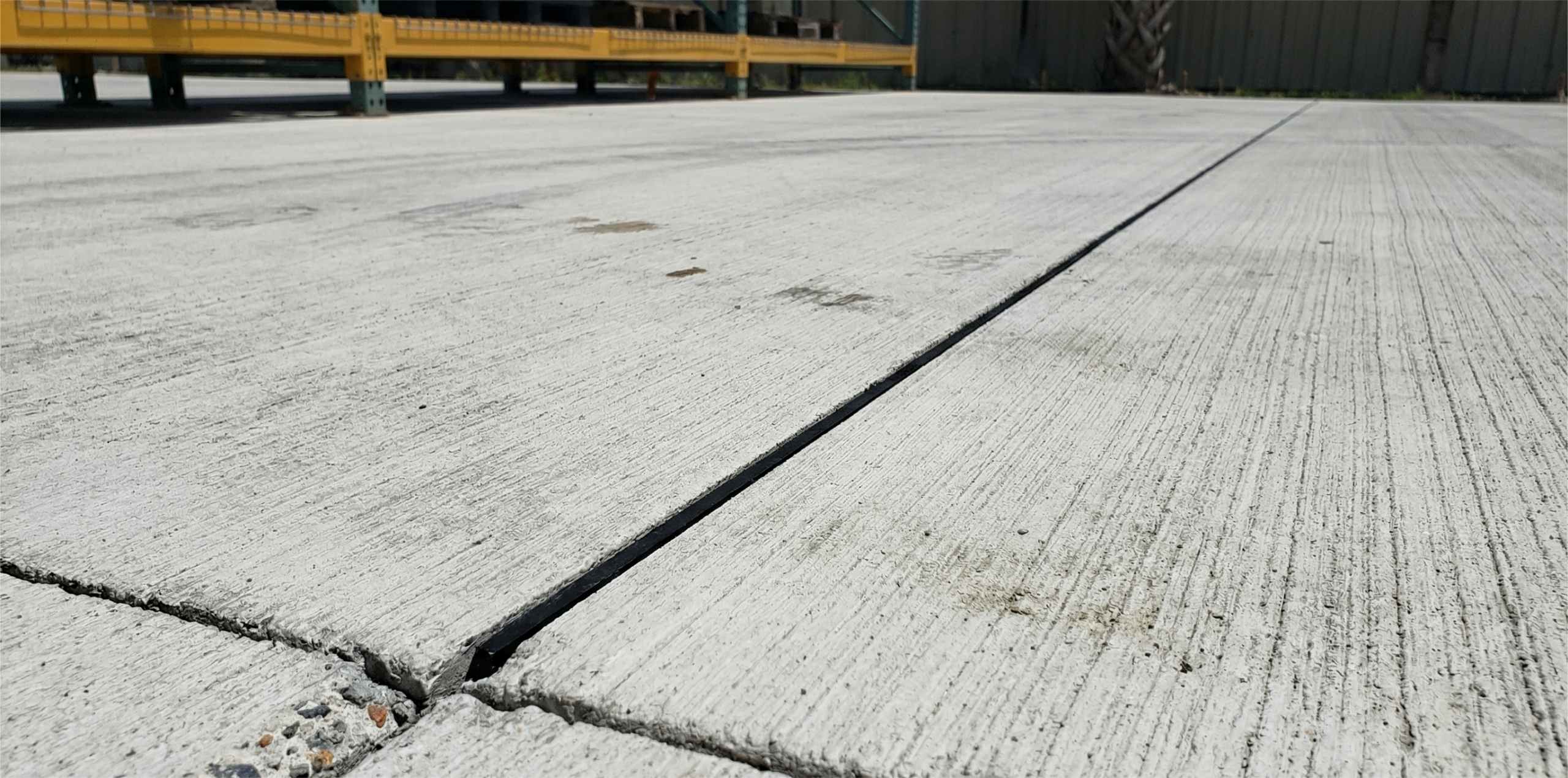
Concrete doesn’t move. Concrete doesn’t rot. Concrete doesn’t shift under a concentrated load. Pour it right one time and you’re done thinking about it.
Shed pads.
Most backyard sheds weigh between 1,000 and 4,000 pounds depending on size and material. A 4-inch slab with wire mesh handles that fine for smaller sheds. Bigger sheds — 12×20 and up — get 5 inches with rebar because the dead load is higher and the footprint means more surface to keep flat. We extend the pad 6 to 12 inches past the shed walls on all sides. Gives you a border to walk on, keeps rain from splashing dirt directly onto the shed walls, and makes sure the full structure is on concrete.
Shipping container pads.
A standard 20-foot container weighs about 5,000 pounds empty. A 40-foot runs 8,500 empty. Load them up and you’re looking at 30,000 to 60,000 pounds depending on contents. That weight sits on four corner castings — roughly 8×8 inches each. So you’ve got potentially 15,000 pounds sitting on 64 square inches per corner. That’s an extreme point load and the pad has to be poured to handle it. Six inches minimum with rebar on a tight grid. We thicken the corners where the castings land if the load justifies it.
Generator and HVAC pads.
Residential standby generators weigh 400 to 800 pounds. Commercial generators can weigh 5,000 to 20,000 pounds. We size the pad to the unit — a Generac whole-house unit needs a 4-inch pad. A commercial diesel genset needs 6 inches with rebar and anchor bolt sleeves cast in. HVAC condensers and package units get the same treatment — match the pad to the unit’s weight and the manufacturer’s installation specs.
Equipment pads and trailer pads.
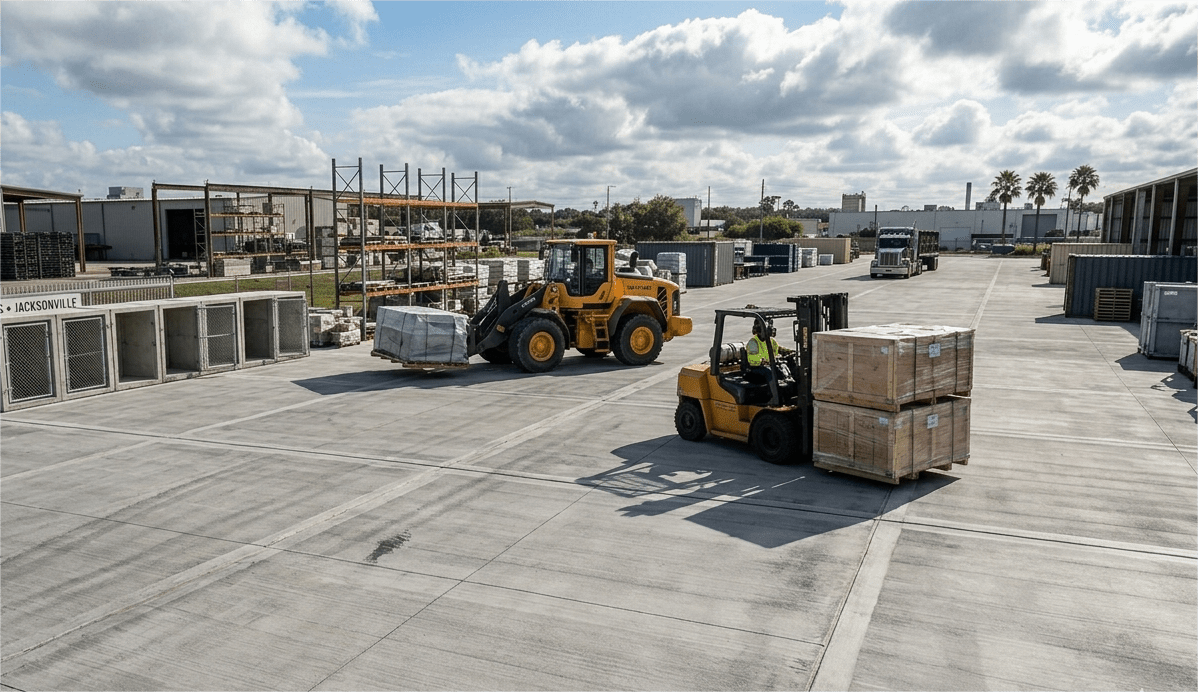
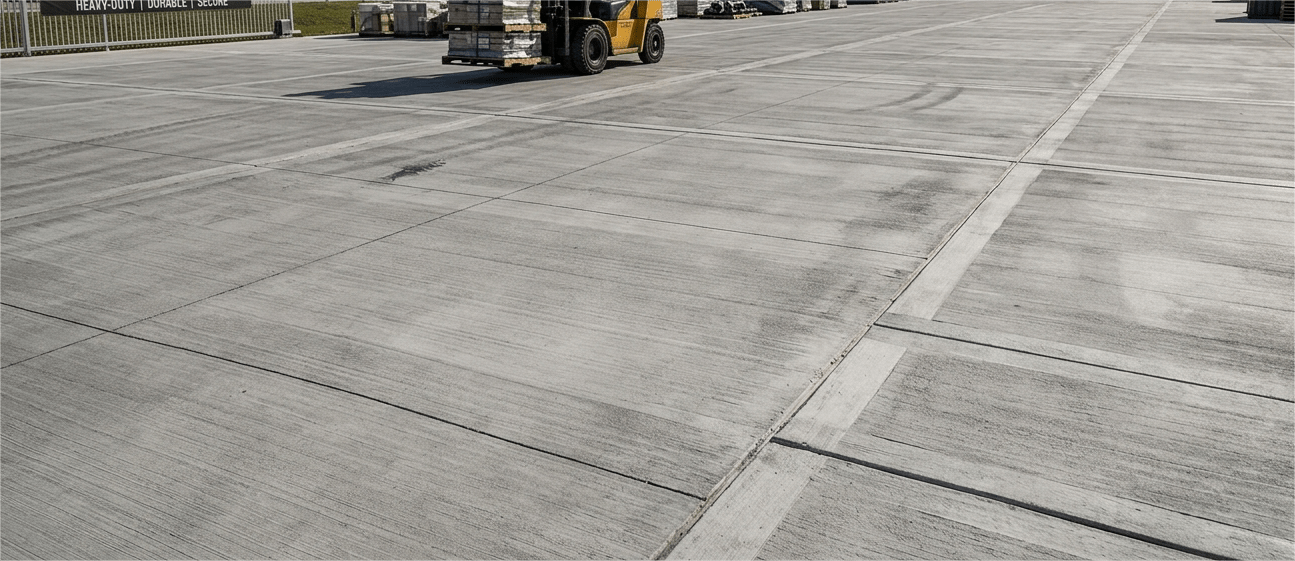
Compressors, welders, tool trailers, boat trailers on blocks for the off-season. We talk to you about what’s going on the slab, how heavy it is, and whether it’s permanent or getting moved on and off regularly. A pad that takes forklift traffic or gets loaded and unloaded with heavy equipment needs more reinforcement than one that holds a stationary object.
Small pads are cheap concrete jobs. That’s the truth. But “cheap” doesn’t mean “skip the base prep.”
A standard 10×10 shed pad in Jacksonville runs between $1,200 and $2,500. A 10×40 shipping container pad runs $3,500 to $7,000. Generator pads are typically $800 to $2,000 depending on size.
What pushes the price around: pad dimensions, concrete thickness, reinforcement, soil conditions, whether we’re removing old concrete or an existing surface, access for the concrete truck, and how much grading the site needs. A flat backyard with a truck-accessible gate is the easiest job. A sloped lot with soft soil and a narrow side yard where we have to pump concrete from the street is more work and more money.
We quote after seeing the site. Every time. Free estimate, written number, no surprises.
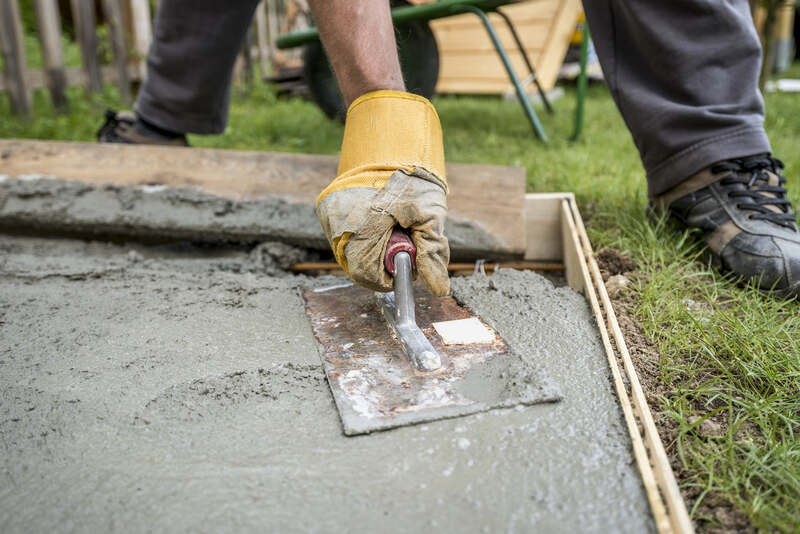
Nobody sees the base under a storage pad. But the base is the whole reason the pad stays flat or doesn’t.
Jacksonville’s soil is mostly sand with pockets of clay. Sand drains but it shifts. Clay holds water and swells. Both of them will move a concrete slab if the base isn’t right.
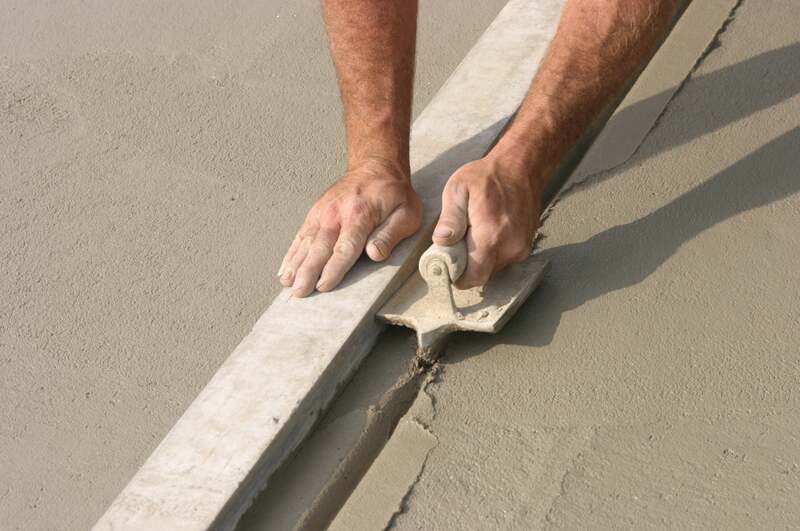
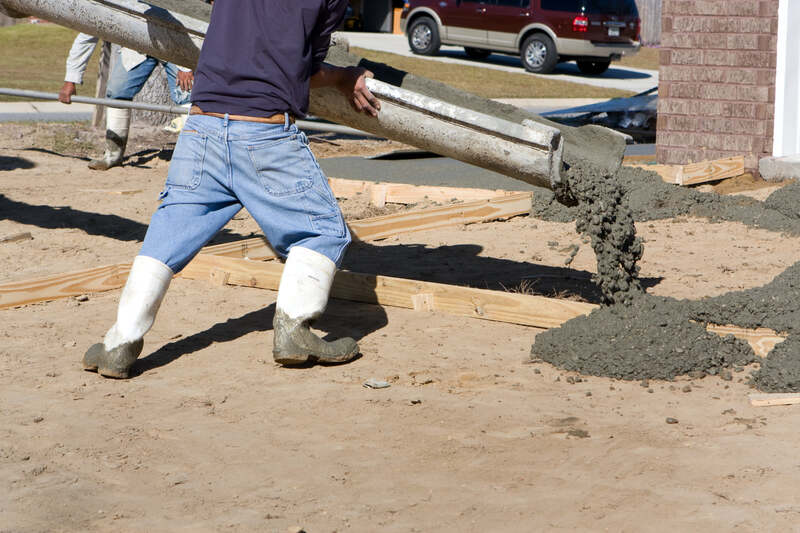
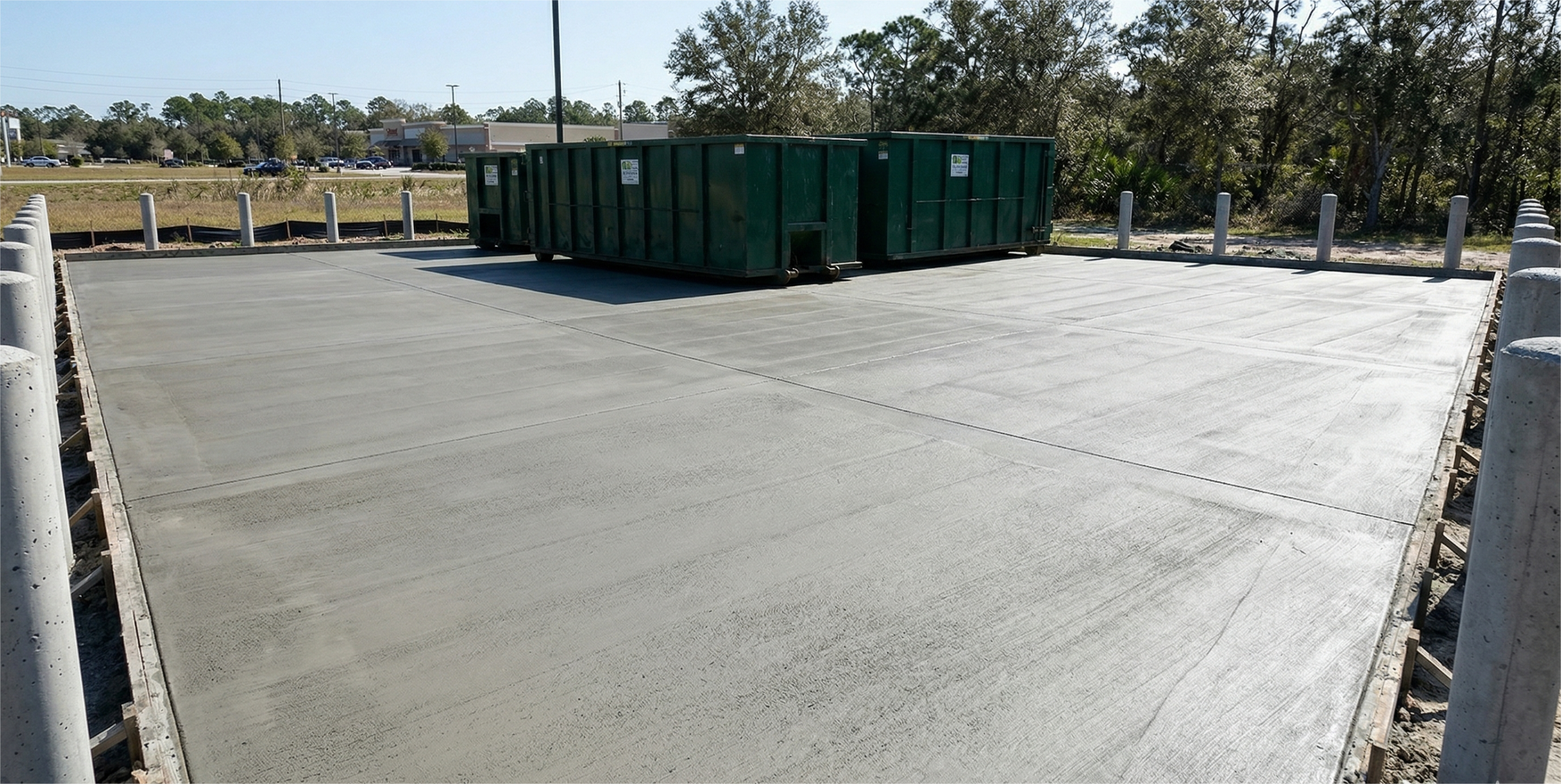
We excavate to the correct depth — enough for 4 to 6 inches of aggregate base plus the slab thickness. Subgrade gets graded flat and compacted. Any soft spots get cut out and filled with clean material. Aggregate goes down in lifts and each lift gets compacted to spec. Then we set forms, check them for level — because if the forms aren’t level the pad won’t be level — tie the reinforcement, and pour.
On sloped lots, we cut into the high side and build up the low side so the pad is flat even though the yard isn’t. We’ll add a small retaining curb or grade transition on the downhill edge if needed to keep the fill from washing out.
The whole point of a storage pad is that it’s flat. If we don’t get the base right, it won’t be flat for long. We’d rather spend an extra hour on dirt work than get a callback in a year because the pad tilted.
Some things that go on storage pads need to be bolted to them. Sheds in hurricane zones. Generators that vibrate. Equipment that can’t move. We set anchor bolts, j-bolts, wedge anchor sleeves, and hold-down straps into the concrete during the pour so they’re cast in and cured in place.
This has to be coordinated ahead of time. We need the bolt pattern before we pour — not after. Drilling into cured concrete for anchors works but it’s weaker than cast-in hardware and it costs more in labor. If you know what’s going on the pad and your shed company or equipment manufacturer has an anchor bolt template, give it to us before pour day.
For sheds in Jacksonville, the Florida Building Code requires tie-downs in most cases. Your shed manufacturer should have a spec for anchor bolt size and spacing. We’ll set them to match.
We show up on time, prep the base the same way we prep a commercial parking lot base, pour to the right thickness, and make sure it’s flat. A storage pad shouldn’t be the thing your contractor cuts corners on because “it’s just a shed pad.”
Family-owned, veteran-owned. Licensed, bonded, insured. 5-star Google rating. We guarantee the work. If the pad settles or cracks because of something we did wrong, we come back. But we haven’t had that call because we don’t skip the dirt work.
Four years pouring concrete across Jacksonville. Residential, commercial, big jobs, small jobs. Every one gets the same base prep and the same attention.
Storage pads across Jacksonville — Mandarin, Arlington, San Marco, Riverside, Southside, Westside, Northside, the Beaches, and throughout Duval County. Also Orange Park, Fleming Island, Ponte Vedra, and St. Augustine.
If you’ve got a shed delivery date on the calendar, call us now. We can usually get a pad poured and cured before the shed shows up if you give us two to three weeks of lead time.
Call LCE Concrete Contractor Jacksonville for a free storage pad estimate anywhere in Jacksonville, FL. We’ll pour it flat, pour it strong, and have it ready before your delivery shows up.
Four inches for light sheds and small equipment. Five to six inches with rebar for shipping containers, heavy equipment, and large structures. We match the thickness to the actual load — not a guess, not a default.
Bigger than the shed. Add 6 to 12 inches on each side beyond the shed footprint. A 10×12 shed needs at least a 11×13 pad, ideally 12×14. That extra concrete gives you a walkable border and keeps the full structure supported.
Depends on the slab. A loaded 40-foot container can weigh 60,000 pounds concentrated on four corner castings. A standard 4-inch patio slab will crack under that load. If your existing concrete is 6 inches thick with rebar and structurally sound, it might work. We’ll check it for you before you drop a container on it and find out the hard way.
Light items after 48 hours. Heavy items — sheds, containers, generators — wait at least 7 days. Full strength is 28 days. If your shed delivery is in two weeks, call us today so the timeline works out.
The pad itself usually doesn’t require a permit. The structure going on it might — sheds over a certain size, generators, and accessory structures can trigger permitting requirements depending on your lot and your zoning. We’ll help you sort out what applies.
Yes. We cut and fill to create a level surface even on sloped lots. The pad ends up flat regardless of the yard grade. It adds some site prep cost but it’s standard work for us.
Call or text. Tell us what you’re putting on it and roughly what size you’re thinking. We’ll come out, look at the site, and give you a written number. Free, no pressure. If you’ve got installation specs from your shed or equipment manufacturer, have those ready — it speeds up the process.