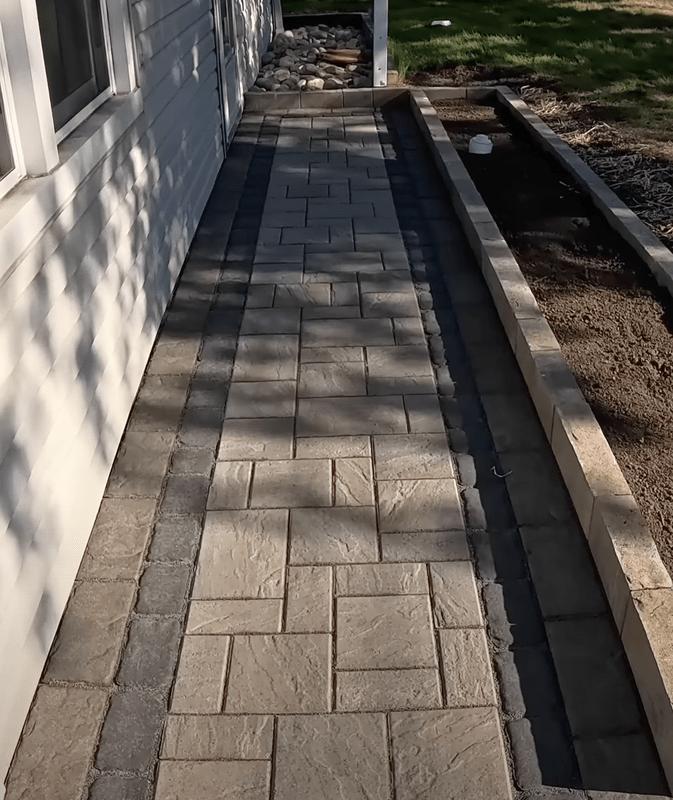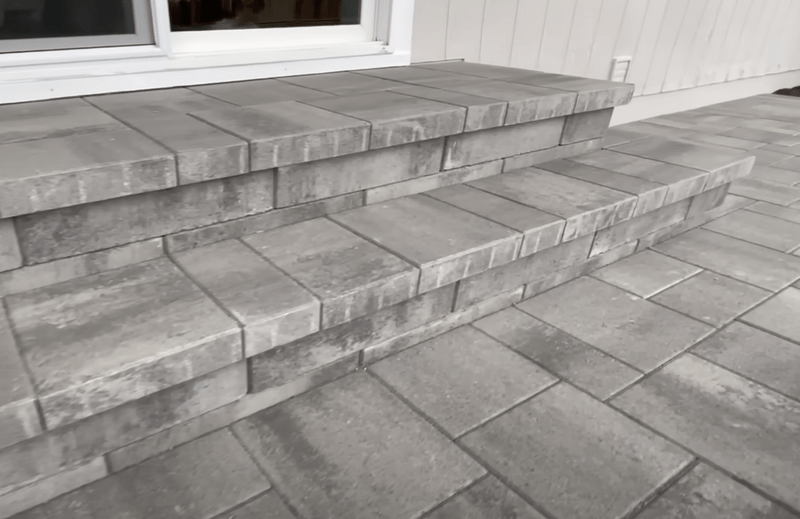
A parking lot gets driven on every single day. Thousands of pounds rolling over the same surface, turning on it, braking on it, sitting on it in 95-degree heat for eight hours. Delivery trucks. Dumpster trucks. That one customer who drives a jacked-up F-350 and parks on the curb stop every time. If the concrete wasn’t poured to handle it, you’ll see the cracks inside of three years.
LCE Concrete Contractor Jacksonville pours commercial and residential concrete parking lots across Jacksonville, FL. New construction, full replacement, section repairs, expansion pads. Licensed, bonded, insured. Four years in business with a 5-star Google rating built on jobs that held up — not on promises.
Need a parking lot poured, repaired, or replaced? Call or text. Free estimate, same-day callback. We don’t make you leave three voicemails.
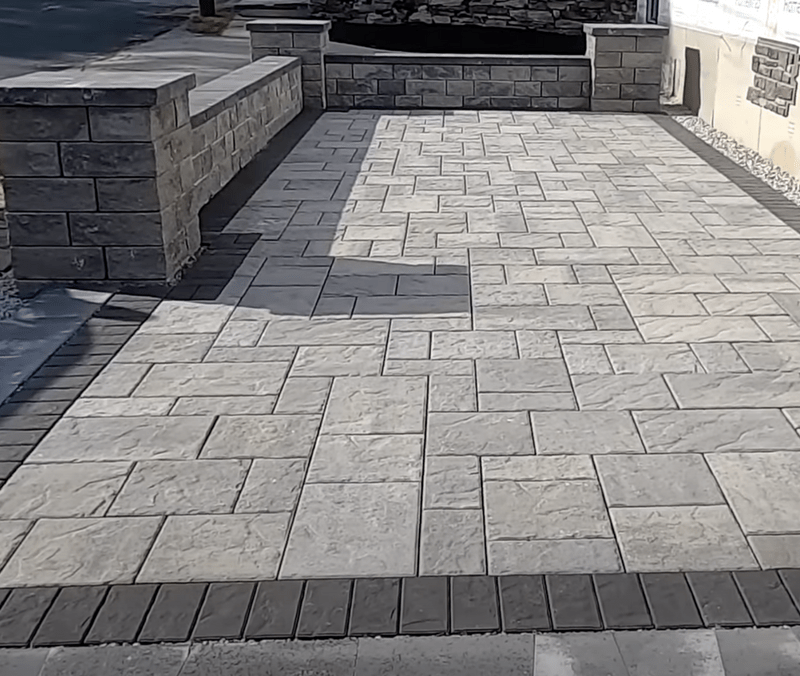
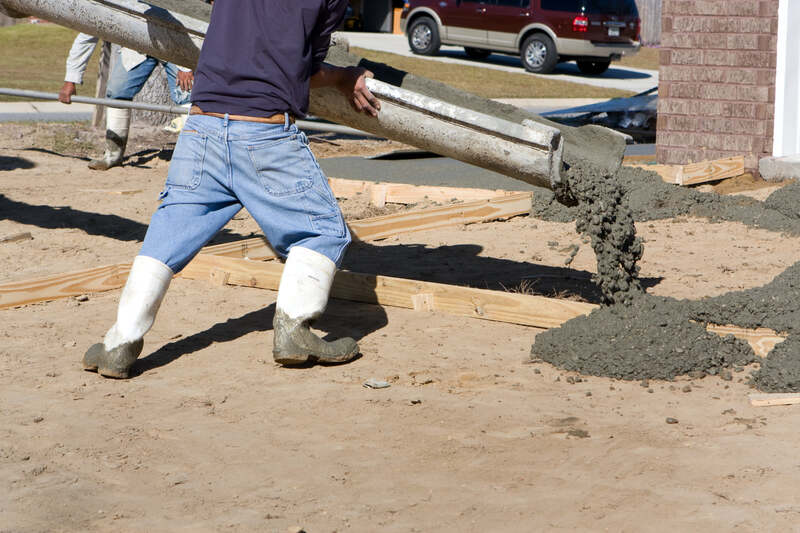
Parking lots are big pours with zero margin for bad drainage. Get the grade wrong and you’ve got a lake in the middle of your lot every time it rains. Get the thickness wrong and you’ve got truck ruts inside a year. Get the joints wrong and the cracks go wherever they want.
We start with surveying the site and shooting grade. The entire lot has to pitch toward the drainage points — catch basins, trench drains, curb outlets, whatever the stormwater plan calls for. In Jacksonville, you don’t get to wing it on drainage. The city wants a stormwater management plan and they want it followed. We build the grade into the subbase before we ever set a form.
Subgrade prep on a parking lot is more work than most people realize. We’re compacting soil across the entire footprint, proof-rolling with heavy equipment to find soft spots, cutting out bad material and replacing it with engineered fill, then laying and compacting aggregate base in lifts. A parking lot that settles in one area doesn’t just crack — it holds water, and water under a slab accelerates every other kind of failure.
Pour day is a production. Multiple concrete trucks queued up, a crew working the screed and the bull floats, finishers behind them, saw-cut crew coming in behind the finishers once the concrete firms up enough to walk on. Timing the control joints is critical — cut too late and random cracks beat you to it. We cut joints on a grid sized to the slab thickness, and we lay them out so they line up with the parking stall striping plan. Nobody wants a control joint running diagonally through a handicap space.
Concrete parking lots in Jacksonville run between $5 and $12 per square foot. Wide range because parking lots come in every size and condition.
The low end is a straightforward new pour on prepped ground with good soil, standard 6-inch thickness, and wire mesh reinforcement. The high end is a thick rebar-reinforced lot with old concrete demo, poor soil that needs over-excavation, ADA-compliant ramps and access aisles, curbing, and catch basin work.
Here’s what moves the price: total square footage, slab thickness, reinforcement type and schedule, curb and gutter work, number of catch basins or drainage structures, soil conditions, demolition of existing pavement, and ADA features.
Some rough math to frame it. A 5,000-square-foot parking lot — maybe 15 to 20 cars — runs roughly $25,000 to $50,000 depending on specs. A 20,000-square-foot commercial lot for a retail strip or church comes in at $100,000 to $200,000-plus depending on how much site work and infrastructure is involved.
We give free written estimates after a site visit. Real numbers. Not per-square-foot guesses from a truck window.
Most commercial property owners default to asphalt because the upfront number is lower. And it is — asphalt parking lots typically cost 30 to 40 percent less to install than concrete. But that’s where asphalt’s advantage ends.
Asphalt in Jacksonville is a maintenance headache. The heat softens it. Heavy trucks leave ruts and depressions. It needs seal coating every 2 to 3 years. Cracks start forming within 5 years and need filling or patching constantly. The typical lifespan of an asphalt lot in Florida is 15 to 20 years if you’re spending money on it the entire time.
Concrete lasts 30 to 40 years with almost no maintenance. No seal coating. No crack filling every summer. No ruts from delivery trucks sitting in the sun. The surface stays hard and flat in 100-degree heat while asphalt gets soft enough to dent with a boot heel.
Run the 30-year cost on both and concrete wins. It’s not close. The upfront savings on asphalt get eaten alive by maintenance and early replacement. We’re not saying asphalt is always wrong — but if you’re building a lot that you plan to own for more than 10 years, concrete is the smarter spend.
Every commercial parking lot needs ADA-compliant features. Accessible parking spaces, access aisles, van-accessible spots, curb ramps with detectable warning surfaces, and proper signage placement. The number of accessible spaces scales with the total lot size.
We build ADA into the pour plan from day one. The accessible spaces go where they need to go — closest to the main entrance, on the shortest accessible route. The ramps get poured to the correct slope — 1:12 maximum running slope with level landings. Detectable warning panels get set into the concrete before it cures. Cross slopes on accessible routes stay at 2 percent or less.
Jacksonville’s inspectors check this stuff. Getting it wrong means ripping out finished concrete and repouring it to spec. We’ve seen it happen to other contractors. We’d rather just build it right the first time, and we do.
we pour integral curb and gutter, extruded curbing, and separate curb runs depending on the lot design. Curb stops for individual spaces. Radius curbing at entry and exit points. ADA-compliant curb cuts where pedestrian routes cross the curb line. It all gets formed and poured as part of the project — not added on as an afterthought.
every parking lot in Jacksonville has to manage stormwater. That means grading the slab to drain points, installing catch basins or trench drains at low spots, and tying into the site’s stormwater system. On larger lots, the drainage plan usually comes from the civil engineer and we pour to their grades. On smaller lots, we handle the grading in-house and make sure water goes where it’s supposed to go.
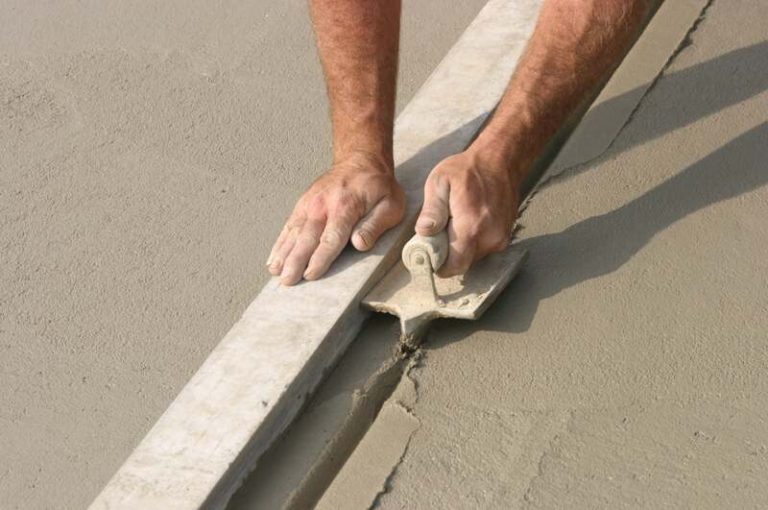
control joints, construction joints, and expansion joints all serve different purposes on a parking lot. Control joints manage cracking. Construction joints mark where one pour stopped and the next started. Expansion joints separate the lot from fixed structures like buildings, curbing, and drain structures. We plan the joint layout before we pour so everything lines up with the striping plan and the drainage plan.
Moisture comes up through concrete. All concrete, all the time. Ground moisture migrates through the slab as vapor and hits whatever’s on top — epoxy, tile adhesive, vinyl, hardwood, carpet pad. Every one of those materials reacts badly to moisture. Epoxy delaminates. Tile pops off. Vinyl bubbles. Hardwood cups. Carpet grows mold underneath where you can’t see it until you smell it.
A vapor barrier stops it. Fifteen-mil poly sheeting laid directly under the slab, seams taped, edges lapped up the perimeter. Thirty cents a square foot. That’s it. That’s the cost of not having your $12,000 floor fail.
In Jacksonville, the water table is high and the humidity is relentless. A slab-on-grade without a vapor barrier is going to transmit moisture. Not might. Will. The only question is whether the finish on top can tolerate it. Most can’t.
We install vapor barriers on every interior floor pour unless somebody specifically tells us not to. And if they tell us not to, we make sure they understand what’s going to happen.
We’re small enough to answer the phone and big enough to pour a 20,000-square-foot lot. That’s the sweet spot most property owners are looking for — a contractor who actually shows up, communicates during the job, and doesn’t vanish the minute they cash the check.
Family-owned, veteran-owned. Our crew is our crew — same guys from base prep through final saw-cut. Licensed, bonded, fully insured. We carry the coverage your property management company or GC requires without being asked twice for certificates.
Four years in business, decades of combined field experience in commercial concrete. 5-star Google rating. We guarantee our work in writing. Something cracks where it shouldn’t or settles where it can’t — we’re back out there fixing it on our dime.
Concrete parking lots across the Jacksonville metro — Downtown, Southside, Westside, Arlington, Mandarin, Northside, the Beaches, San Marco, Riverside, Town Center, Regency, the airport corridor. Also Orange Park, Fleming Island, Ponte Vedra, and St. Augustine.
Churches, strip malls, office parks, apartment complexes, warehouses, medical offices, restaurants — we’ve poured lots for all of them in this city.
Don’t let it be the worst thing about your property. Call LCE Concrete Contractor Jacksonville for a free estimate on concrete parking lot work anywhere in Jacksonville, FL.
Depends on the size. A small 20-car lot might take a week from site prep through final saw-cuts. A large commercial lot with curbing, drainage structures, and ADA work can take 3 to 6 weeks. We phase the work on occupied properties so you don’t lose your entire lot at once.
Six inches is standard for car traffic. Areas that handle regular truck traffic — loading zones, dumpster pads, drive-through lanes — should be 7 to 8 inches with heavier rebar. We spec thickness based on what’s actually driving on each section.
Concrete costs more upfront but lasts twice as long with almost zero maintenance. Asphalt is cheaper to install but softens in Florida’s heat, needs constant maintenance, and will be replaced at least once in the time a concrete lot is still performing. Over 30 years, concrete is the cheaper option.
We handle the concrete, curbing, and drainage. Striping and signage are typically done by a specialty striping contractor after the concrete cures. We can coordinate with a striping company or recommend one in Jacksonville if you need a referral.
Yes. We do it regularly. We’ll phase the demo and pours so you always have enough parking available for your tenants or customers. It takes more planning but it’s standard practice on occupied commercial properties.
In most cases, yes — especially for lots over a certain impervious surface threshold. The requirements depend on the lot size, location, and the local stormwater management district. We’ll help you figure out what’s needed during the estimate process.
Call or text us. We’ll schedule a site visit, look at the existing conditions, discuss the scope, and give you a detailed written estimate. Free, no obligation. We work with property owners, property managers, developers, and general contractors.